Enantiodromia: The Ancient Law That Governs Every Transformation
Enantiodromia is a concept from Carl Jung's analytical psychology describing the tendency of any extreme psychological position to eventually transform into its opposite. The term comes from the Greek enantios ("opposite") and dramein ("to run"), and was originally proposed by the pre-Socratic philosopher Heraclitus around 500 BCE. Jung adopted the concept in Psychological Types (1921) and defined it as the surfacing over time of the unconscious opposite,² observing that when a one-sided attitude dominates conscious life, an equally powerful counterposition builds in the unconscious until it breaks through conscious control.
Heraclitus proposed it. Jung turned it into a clinical principle. Nietzsche circled it without naming it. The Taoists built an entire cosmology around it. And whether you have the language for it or not, you have already lived through it.
Get new posts when they publish
Heraclitus and the War of Opposites
Heraclitus of Ephesus wrote around 500 BCE in fragments so compressed that the ancient world called him the Obscure. His central insight was that reality is constituted not by any single substance but by tension. In Fragment 51, Heraclitus holds that harmony is made of opposing tension, like that of a bow or a lyre.¹ The bow works because the string and the wood pull in opposite directions. Remove the opposition and you have a stick and a limp string.
In Fragment 126 he lists the reversals: the cold warms, the warm cools, the wet dries, the dry moistens.¹ He is describing structural necessity. The cold becomes warm because it is cold. The extreme state carries within it the conditions for its own reversal. In Fragment 80 he names conflict the father of all things.¹ The universe is disruption organized into temporary patterns, and the moment any pattern becomes too rigid, it shatters into what it was trying to suppress.
Jung read Heraclitus closely and recognized in these fragments something he was seeing in his consulting room every week.
Jung's Clinical Discovery
Jung's formal definition appears in Psychological Types (1921). He reserved the term for the appearance of the unconscious opposite over time: whenever an extreme, one-sided tendency dominates conscious life, an equally powerful counterposition builds up, first inhibiting conscious performance and then breaking through conscious control.²
The conscious attitude does not merely weaken. It gets invaded from below. The unconscious opposite accumulates in the dark, gathers force, and breaks through in a form the conscious mind neither expects nor controls. The more total the identification with one pole, the more violent the eruption of the other.
In Two Essays on Analytical Psychology (1928), Jung describes the clinical pattern. A patient constructs an elaborate conscious attitude (the selfless mother, the rational thinker, the spiritual seeker) and identifies with it completely. The opposite qualities sink into the unconscious and organize themselves into what Jung called a counterposition. The more one-sided the conscious attitude, he observed, and the further it deviates from the optimum, the more likely vivid dreams of strongly contrasting but purposive content become, as an expression of the psyche's self-regulation.³
The examples from Jung's case material are specific. The devoted mother whose dreams are full of destruction and abandonment. The intellectual rationalist overcome by superstitious rituals. The man who built his identity around selfless service and then, in his forties, became consumed by bitter need for recognition. None of these people chose to reverse. The reversal happened to them.
In The Structure and Dynamics of the Psyche, Jung laid out the compensatory model that gives enantiodromia its mechanism. The psyche, he wrote, is a self-regulating system that maintains its equilibrium just as the body does: every process that runs too far inevitably calls forth compensations, without which there would be neither a normal metabolism nor a normal psyche.⁴
The unconscious is not random noise. It is a compensatory system that produces content correcting the one-sidedness of consciousness. Dreams are the primary vehicle for this correction. When this compensatory process is ignored long enough, the dreams become more vivid, more insistent. And if the dreamer continues to override the message, the compensation stops expressing itself in dreams and begins expressing itself in life. Symptoms. Compulsive behaviors. The eruption of precisely the qualities the person had spent years suppressing.
Jung considered the conversion of Paul on the road to Damascus the most dramatic example of enantiodromia in Western history. He read it as frankly psychological: the fanatical persecutor of Christianity became its equally fanatical apostle.²
Paul, the most zealous persecutor, became Paul, the most zealous evangelist. The content reversed completely. The psychological structure remained identical: the fanaticism, the totality of commitment, the inability to hold tension. Enantiodromia does not change you. It flips you.
This is what separates enantiodromia from genuine transformation. Individuation, Jung's term for conscious psychological development, involves integrating the opposite rather than being possessed by it. In The Structure and Dynamics of the Psyche, he describes the alternative: the confrontation of the two positions generates a tension charged with energy and creates a living, third thing, a movement out of the suspension between opposites and a living birth that leads to a new level of being.⁴
The living third thing, the transcendent function, is what enantiodromia never produces on its own. The reversal is mechanical. The transcendent function requires conscious participation: the willingness to hold the tension, to refuse to collapse into either side, to endure contradiction until something new emerges from it.
Jung linked this directly to the shadow in The Archetypes and the Collective Unconscious. Everyone carries a shadow, he held, and the less it is lived in conscious life the blacker and denser it grows, until it forms an unconscious snag that thwarts our most well-meant intentions.⁵
That snag is enantiodromia at the personal level. You set out to be kind and find yourself snapping at someone you love. You commit to discipline and find yourself bingeing. The shadow does not wait for permission. It finds the gap in your armor and acts through it, and the wider the gap between your conscious identity and your unconscious reality, the more destructive the eruption.
Nietzsche, Hegel, and the Taoists
Nietzsche never used the word, but the opening of Human, All Too Human (1878)⁹ is a sustained meditation on how things become their opposites. His answer: these are not separate categories. They are phases of the same process. Christianity, he argued, had pushed the morality of self-denial so far that it produced its own negation: a culture incapable of believing in anything at all. The most pious civilization in history generated the most nihilistic outcome. Not in spite of its piety. Because of it.
Jung saw Nietzsche as someone who diagnosed enantiodromia at the civilizational level but could not find the way through it. Nietzsche saw the reversal. He could not see past it.
Hegel's dialectic (thesis, antithesis, synthesis) looks similar but differs in a way that matters. Hegel assumes the collision of opposites produces something higher. History moves upward. Enantiodromia promises nothing of the kind. The reversal is cyclical, not progressive. Unless someone consciously intervenes to hold the tension, the pendulum keeps swinging. Indefinitely. Jung did not tell patients to wait for synthesis. He told them to hold the tension.
The Eastern tradition understood this before the Greeks articulated it. In Chapter 40, the Tao Te Ching names return as the motion of the Tao.⁸ The entire cosmology of yin and yang¹⁰ is built on the recognition that each polarity contains the seed of its opposite and that the moment either reaches its maximum, it transforms. Lao Tzu's Chapter 76, that the stiff and unbending belong to death and the soft and yielding to life,⁸ could have appeared in Jung's own clinical writings. Rigidity is what triggers the reversal.
Civilizations and the Collective Shadow
Jung did not confine enantiodromia to the consulting room. In Civilization in Transition, he applied the principle to cultures. A civilization that identifies too completely with one set of values will eventually be possessed by the opposite.
Rome built on civic virtue and the mos maiorum generated an empire so wealthy that it drowned in the decadence its founding values were designed to prevent. Weimar, the most cosmopolitan and artistically experimental culture in Europe, produced within a decade the most tribalistic and irrational regime the continent had ever seen. Jung addressed this directly in his 1936 essay "Wotan," describing the eruption of National Socialism as a possession by the archetype of Wotan, the German god of storm and frenzy. The extreme rationalism and liberalism of Weimar had no room for the irrational, and the irrational found its own room. The Puritans produced the most materialistically obsessed culture in human history. The French worship of Reason led directly to the Terror. In every case: the more total the identification with one pole, the more violent the eruption of the other.
Dreams as the Psyche's Early Warning
Jung's compensatory theory of dreams is enantiodromia expressed nightly. The peaceful person dreams of violence. The confident person dreams of humiliation. The atheist dreams of God. In Civilization in Transition, Jung describes dreams as pure nature: products of an unconscious activity beyond the dreamer's control, showing the unvarnished natural truth, and therefore fitted as nothing else is to give back an attitude that conforms to our basic human nature when consciousness has strayed too far from its foundations.⁶
The dream is the psyche's attempt to course-correct before the correction becomes involuntary. Attend to the dream and you have a chance at integration. Ignore it long enough and the unconscious stops communicating through dreams and starts acting through your life.
What Jung Asks of You
Enantiodromia is not a curse. It is the psyche's operating system. The curse is unconsciousness of it.
Jung's answer is the same answer that Heraclitus's bow implies and that the Tao Te Ching states directly: hold the tension. Do not resolve it by identifying with one side. Engage the opposite consciously, before it engages you involuntarily. That means attending to what you have been ignoring. Taking your dreams seriously, not as entertainment but as data from a self-regulating system that knows more about your situation than your ego does. Developing a relationship with your shadow. Not indulging it, not acting it out, but knowing it, acknowledging its presence, giving it a seat at the table before it kicks down the door.
Jung wrote in Alchemical Studies that one does not become enlightened by imagining figures of light but by making the darkness conscious, and that this procedure, being disagreeable, is therefore not popular.⁷
The bow needs both the string and the wood. The psyche needs both the light and the dark. Enantiodromia is what happens when you refuse to accept that, and the unconscious accepts it for you.
About the Author
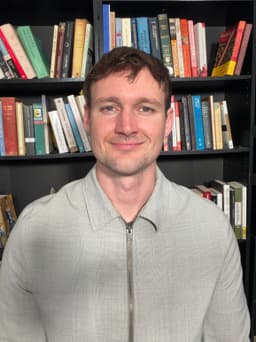
Brandon P
Brandon P is the founder of DreamDancer and a researcher in Jungian dream analysis. After a transformative dream experience in 2024, he immersed himself in Carl Jung's Collected Works, studying archetypal psychology, dream interpretation methodology, and the neuroscience that validates Jung's core theories.
His research draws from Jung's compensatory dream theory, Jaak Panksepp's affective neuroscience, Mark Solms' neuropsychoanalysis, and the work of Marie-Louise von Franz. He has analyzed hundreds of dreams using formalized Jungian methodology and is a member of the Baton Rouge Jung Society.
References
-
Heraclitus. Fragments. Trans. Brooks Haxton. Penguin Classics, 2003.
-
Jung, C.G. Psychological Types (1921). Collected Works, Vol. 6. Princeton University Press, 1971.
-
Jung, C.G. Two Essays on Analytical Psychology (1928/1943). Collected Works, Vol. 7. Princeton University Press, 1966.
-
Jung, C.G. The Structure and Dynamics of the Psyche. Collected Works, Vol. 8. Princeton University Press, 1969.
-
Jung, C.G. The Archetypes and the Collective Unconscious. Collected Works, Vol. 9i. Princeton University Press, 1968.
-
Jung, C.G. Civilization in Transition. Collected Works, Vol. 10. Princeton University Press, 1970.
-
Jung, C.G. Alchemical Studies. Collected Works, Vol. 13. Princeton University Press, 1967.
-
Lao Tzu. Tao Te Ching. Trans. Stephen Mitchell. Harper Perennial, 1988.
-
Nietzsche, Friedrich. Human, All Too Human (1878). Trans. R.J. Hollingdale. Cambridge University Press, 1996.
-
Wilhelm, Richard, trans. The I Ching, or Book of Changes. Trans. Cary F. Baynes. Princeton University Press, 1967.